
What We Don't See, Even When We Are Trained to Look, Physician Grief
- laurengrawert
- Mar 2
- 5 min read
In memory of Nolan Williams, MD— research pioneer, colleague, friend

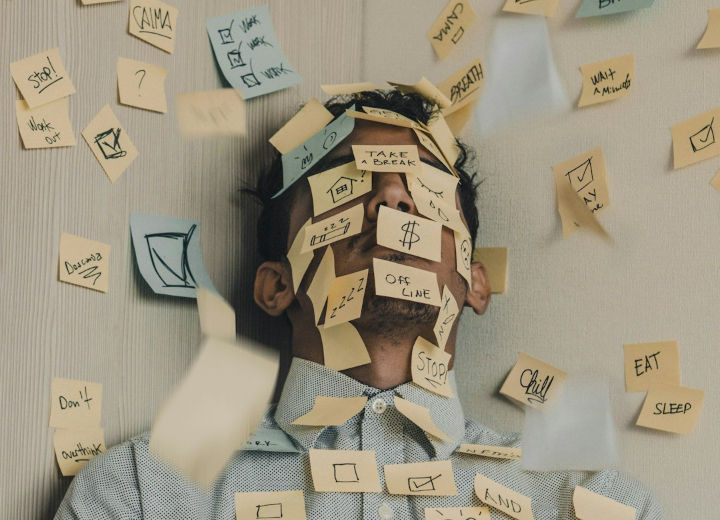
Photo by Agence Olloweb on Unsplash
Physician Grief
My friend and colleague Dr. Nolan Williams died by suicide last year. Upon hearing the news, my first reaction was not shock in the way people usually mean it. It was pure disbelief. Complete cognitive dissonance. The facts did not match the reality.
As both a psychiatrist and neurologist, Nolan was not only respected—he was transformational to modern interventional psychiatry. His work helped push transcranial magnetic stimulation (TMS) beyond incremental symptom improvement into a new, previously impossible era of rapid mood recovery. Through accelerated, high-dose, highly individualized TMS protocols now known as SAINT, he challenged long-held assumptions about how quickly and effectively severe, treatment-resistant depression could be treated. For patients who exhausted medication after medication, his work offered something psychiatry rarely gets to promise: rapid, complete symptom relief.
If you work in the TMS world, you know his name. He’s a legend. If you treat patients with refractory depression, you have likely benefited—directly or indirectly—from his contributions. Nolan redefined what was possible for people at the very edge of despair.
Which is precisely why his death is so difficult to metabolize.

As psychiatrists, we are trained—implicitly and explicitly—to believe that vigilance saves lives. That if we simply ask the right questions, notice the right signals, intervene early enough, see patients often enough, provide the right level of care, and constantly update suicide safety plans, we can reliably prevent suicide. Sometimes this is true. But Nolan’s death forces a harder truth into the open: expertise and intelligence do not grant immunity to psychiatric struggles. Proximity to treatment does not always equal use of treatment.
One of the most destabilizing aspects of losing a colleague to suicide is the quiet professional reckoning that follows. We replay conversations. We examine tone and timing. We search for missed signs. We explore more of ourselves. We’re disappointed we didn’t see it coming. This reflex comes from care—but also from our very deep discomfort with uncertainty. We want suicide to be legible. Predictable. Findable in a defined clinical algorithm buttressed with “protective factors” and “risk factors.” And preventable-if only we are skilled enough.
But Nolan’s life and work complicate that narrative. He understood the neurobiology of depression at an extraordinary depth- better than all of us. He helped develop treatments designed explicitly to interrupt suicidal despair. He had a beautiful, loving wife (who is also a psychiatrist) and two adorable children. He was surrounded by supportive, loyal friends and immersed in the science of relief—yet all of that did not translate into invulnerability.
And perhaps that is the lesson we resist the most.
There is a subtle form of professional hubris embedded in modern psychiatry: the belief that if we are observant enough, compassionate enough, or trained enough, we can always see the edge before someone falls. But Nolan’s death reminds us that the inner life of another person remains, to some degree, unknowable. Even when that person is the most accomplished among us. Even when that person is closest to us. Even when that person is surrounded by the most advanced mental health treatment options in the world.
Physicians do not grieve the way most people do. When a colleague dies, especially unexpectedly, grief rarely arrives cleanly or immediately. There are patients to see, notes to finish, prior authorizations to complete, inboxes that keep filling. We acknowledge the loss briefly—sometimes in private, small group texts—and then we keep going. Not because we are unfeeling, but because medicine trains us to function first and feel later.
Physician grief also carries an additional burden: professional responsibility. We don’t just mourn—we audit. We ask what we should have noticed, what we missed, what we might have done differently. Our entire profession is built on the premise that observation matters. But when applied to grief, that instinct quietly turns mourning into self-interrogation.
There is also a particular loneliness to losing a colleague because they occupy a dual role: professional peer and emotional mirror. Colleagues understand the weight of the work without explanation. They witness our competence and our uncertainty. When one of them dies, it destabilizes not only our sense of safety, but our greater sense of self within the profession.
In addiction psychiatry, I often sit with patients whose suffering is invisible to those around them—patients who are accomplished, admired, outwardly intact. Their pain does not announce itself in ways that fit our screening tools or traditional diagnostic criteria. It hides behind competence, confidence, curiosity, generosity, productivity, and professional success. Nolan embodied all these traits. In retrospect, it’s not that warning signs were missed—they just never appeared in ways we expected them to.

Nolan understood both the complexity and simplicity of the human condition. We both worked at a large state psychiatric hospital for three-day weekend shifts. The shift started at 5 pm on Friday afternoon and ended at 8 am on Monday morning. The hospital came with an endless line of patient admissions around the clock ranging from substance induced psychosis to homelessness to severe, treatment resistant schizophrenia.
It was hard work. We nicknamed the hospital “the jungle.” If you could survive there as a doctor, you could survive anywhere. Most nights you were up all night-pager buzzing incessantly like an extra body appendage. One Monday morning Nolan returned from the jungle looking surprisingly rested and refreshed. I cocked my head to the side and eyed him suspiciously. “How many times were you paged over night?” I asked. Unphased, he responded, “Only once.” I stared at him dumbfounded with a mix of awe and jealously. I quickly replied, “Well how in the world did you do that?” With a shrug and a smile, he responded, “I bought all the nurses pizza.”
This is not an argument against suicide prevention. Nolan dedicated his career to alleviating suffering. It is, instead, an argument against the quiet assumption that suicide always represents a failure of detection or intervention. Sometimes it reflects the limits of what even the most advanced tools—and the most brilliant minds—can reach.
What Nolan’s death changed for me is not how closely I scrutinize others, but how gently I hold my own assumptions. I am less confident that I can tell who is struggling most. I am more willing to accept that silence does not equal safety. I’m more aware that even incredible intelligence and unimaginable professional success do not grant immunity to emotional pain. I recognize that brilliance and suffering are not opposites—they often coexist.
I am also more intentional about how I show up with colleagues—not as a psychiatrist scanning for pathology, but simply as a human willing to make space for complexity without demanding disclosure. We do not need to be fixed in our grief. We need room to carry it.
Nolan’s scientific legacy will endure—in protocols refined, in patients helped, in the field of neuromodulation now permanently shifted lightyears forward due to his work. But for those of us who knew him, his death leaves us with a quieter, harder inheritance: a reminder that certainty has limits. And that self-compassion must extend beyond our belief that we “should” have known.
All healthcare professionals should continue to ask, screen, intervene, and care deeply about suicide prevention. But we should do so with humility—recognizing that at the end of the day, preventing every single loss might not be doable by anyone, no matter how many algorithms and safety plans we create. And that it’s not the measure of our worth. That simply recognizing and honoring uncertainty, grief, and connection may be among the most human and most healing acts our profession can offer.
-Lauren Grawert
TAGS: #nolanwilliams #handlingloss #physiciangrief #grief #laurengrawert #advancedpracticepartners #wisconsin #mentalwellness #2025 #2026 #health #oped #wisdom #hipaa #psychiatrists #pmhnp #therapists #psychology #medical
LINKS: advancedpracticepartners.com | The White Coat Warrior LINKEDIN | Lauren Grawert | Robert Glenn | Jon Snipes
© 2026


Comments